
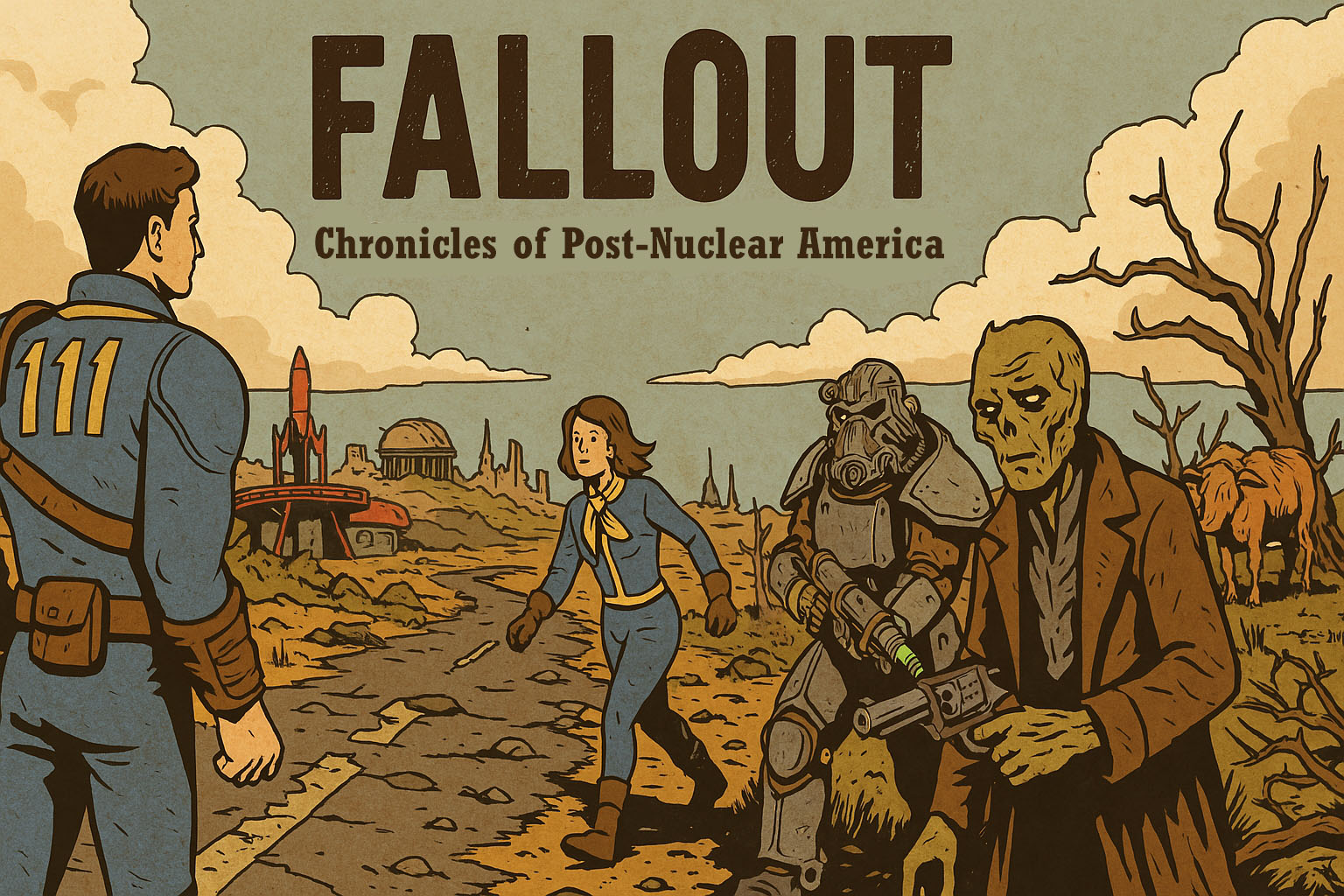
Fallout: Chronicles of Post-Nuclear America
Beginning: From Wasteland to Fallout The history of Fallout does not start with the very first game, but with its spiritual predecessor — Wasteland (1988), a turn-based RPG set in a post-apocalyptic world, developed by I...
Beginning: From Wasteland to Fallout
The history of Fallout does not start with the very first game, but with its spiritual predecessor — Wasteland (1988), a turn-based RPG set in a post-apocalyptic world, developed by Interplay Studios. This game set the tone for future projects and laid the foundation for a genre that later became iconic. When Interplay failed to acquire the rights to continue Wasteland, the team decided to create a new universe — thus the idea of Fallout was born.Inspired by the aesthetics of the 1950s, Cold War fears, and movies like Mad Max, the first Fallout was released in 1997. It was developed by Black Isle Studios under the direction of Tim Cain. The game was supposed to use the GURPS system, but eventually featured a unique role-playing system called SPECIAL — Strength, Perception, Endurance, Charisma, Intelligence, Agility, Luck.
This game surprised everyone with its mature, dark yet ironic atmosphere of post-nuclear America, where culture was stuck in time while technology had advanced far — before the world fell into atomic war flames. Its unique visual style, nonlinear storyline, deep RPG mechanics, and well-crafted world with moral dilemmas turned Fallout into a true legend and started one of the greatest RPG franchises in video game history.
Fallout (1997) — the beginning of it all
The events of the first game take place in 2161, 84 years after the Great Nuclear War that began on October 23, 2077. The conflict between the USA, China, and other powers lasted only two hours but forever changed the world, turning Earth into a radioactive wasteland. Few survivors found refuge in underground Vault-Tec complexes.The player assumes the role of the Dweller of Vault 13, tasked with finding a water chip essential for the survival of his community. As the journey unfolds, he encounters raiders, mutants, and a mysterious figure named the Master — a being striving to unite humanity through forced mutation.
The game is a classic RPG with isometric view and turn-based combat, with special emphasis on moral choices and freedom of action. It was praised for its atmosphere, nonlinearity, and philosophical depth. Fallout laid the foundation for the entire franchise, featuring post-apocalyptic landscapes, vaults, radiation, mutants, and the eternal struggle for survival.
Fallout 2 (1998) — freedom and satire
The second part was released just a year later, with events occurring 80 years after the original — in 2241. The protagonist is the Chosen One, a descendant of the Vault Dweller from the first game. His goal is to find the GECK device (Garden of Eden Creation Kit), capable of restoring nature and civilization.Fallout 2 kept the original’s core but became bigger, more satirical, and crazier. Politics, sex, drugs, corporations, religions — everything was mocked. The game offered multiple endings and playthrough options, solidifying the series’ status as one of the most variable RPGs of its time.
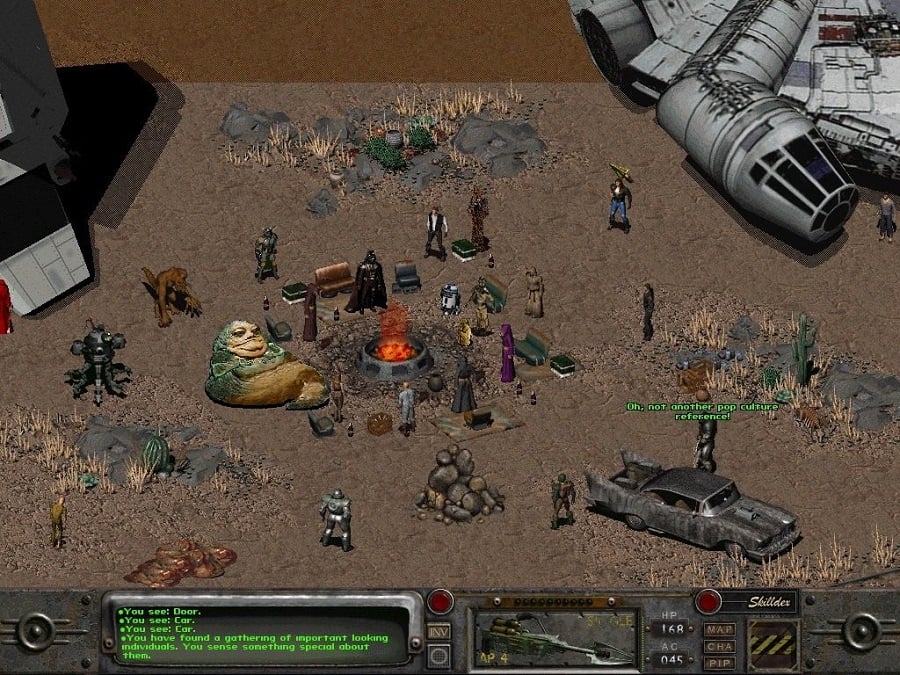
Fallout Tactics: Brotherhood of Steel (2001) — a combat spin-off with a tactical focus
Fallout Tactics: Brotherhood of Steel is an unconventional spin-off of the series, released in 2001 and developed by Micro Forté. Unlike the classic RPGs Fallout and Fallout 2, the game emphasizes tactical battles, squad management, and strategic planning. It was the first game in the series to feature multiplayer and the option to play in real-time or turn-based mode — player’s choice.The story unfolds in the US Midwest, between the events of the first and second games. The player takes the role of a recruit of the Brotherhood of Steel, an elite technocratic organization zealously guarding pre-war technology. After an airship crash, the squad becomes isolated from the main Brotherhood faction and begins building its own empire, recruiting mutants, ghouls, dogs, and even robots — a first in the series’ history.
Gameplay focuses on managing a squad of soldiers, each with unique stats, skills, and race. The campaign involves battles against raiders, mutants, beastmen, robots, and even a techno-fanatic cult called the Rippers. Each mission is a separate location with tactical objectives: clearing, rescue, reconnaissance, or target elimination. The player has access to three combat modes: individual turn-based, team turn-based, and continuous (real-time with action points).
Although Fallout Tactics didn’t receive as much acclaim as the main entries, it expanded the Brotherhood of Steel lore, showing internal conflicts, ideological disagreements, and expansion ambitions. The game also introduced Vault Zero — a legendary command center of the pre-war vault network, hiding the AI Calculator, who becomes the final antagonist.
Despite technical issues and a more linear structure, Fallout Tactics offers a deep combat system, a variety of races and classes, and a unique militaristic post-apocalyptic atmosphere. It became an important element of the Fallout universe, inspiring future projects and maintaining interest in the series in the early 2000s.
Fallout: Brotherhood of Steel (2004) — the unexpected failure
After the success of the first two Fallout games and the niche but respected Fallout Tactics, Interplay Entertainment decided to target the console audience and try to adapt the series to a format more familiar to console owners. The result was Fallout: Brotherhood of Steel, released in January 2004 exclusively for PlayStation 2 and Xbox.Unlike its predecessors, this game had nothing to do with deep role-playing systems, open worlds, and moral choices — the core elements that earned the series its cult status. Instead, it became a linear action game with an isometric view, focused on arcade gameplay and simple combat mechanics. It was a painful but important episode in Fallout’s history. It reminded both developers and fans that the spirit of Fallout is not just a brand or a location. It is a set of ideas, mood, and depth that cannot be replaced by a linear action game and a heavy soundtrack. Perhaps the game deserves attention as part of the history, but for most fans, it remains a dark page they want to forget.
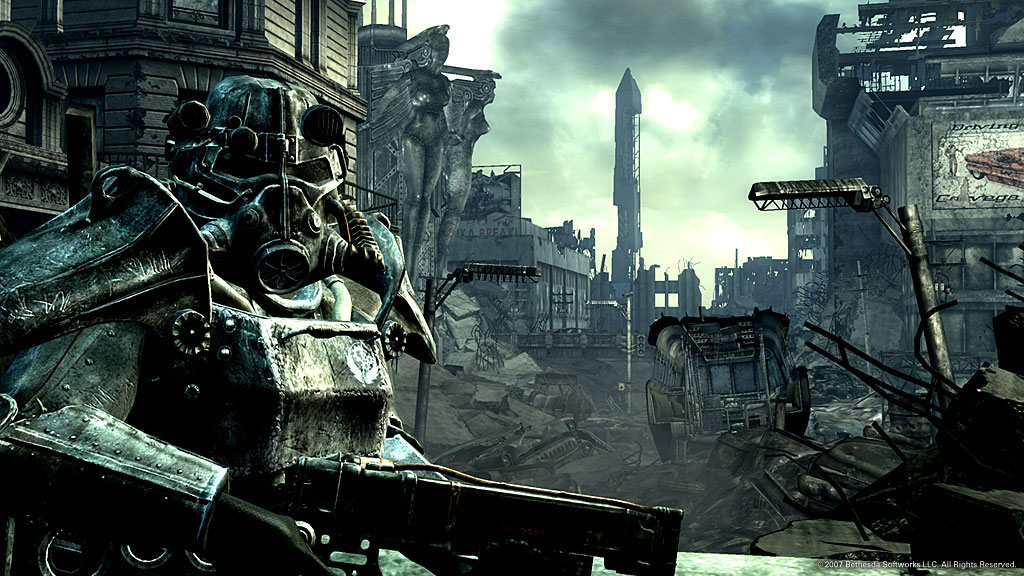
Fallout 3 (2008) — rebooting the legend
After Interplay’s bankruptcy, the rights to the cult Fallout franchise were acquired by Bethesda Softworks — creators of The Elder Scrolls. In 2008, the series returned with Fallout 3, a radical reboot featuring full 3D graphics, first/third-person perspective, open world, and real-time combat. All this while preserving the signature post-apocalyptic atmosphere.The game’s events take place in 2277 in the Capital Wasteland — a ruined Washington, D.C. The protagonist is the Dweller (or Outlander) from Vault 101, who leaves the bunker in search of his father who broke the rules. As the journey unfolds, the player becomes involved in the conflict between the Enclave and the Brotherhood of Steel, facing moral dilemmas and consequences of their own decisions.
Fallout 3 received numerous awards, becoming a mega-hit and attracting a new audience. Despite criticism from old fans for "casualization," the game preserved the original’s spirit — dark atmosphere, black humor, freedom of choice, and nonlinearity. It paved the way for a new generation of games in this universe and forever changed what modern RPGs could be.
Fallout: New Vegas (2010) — return of the classic spirit
Developed by Obsidian Entertainment, which included veterans of the original Fallout, New Vegas is considered the spiritual successor to Fallout 2 — and remains for many fans the best entry in the series. The events take place in 2281 in the Mojave Desert, where the once vibrant Las Vegas has become New California.The protagonist is the Courier, shot and left for dead in the prologue. Rescued by a mysterious robot named Victor, he becomes embroiled in a grand conflict between the NCR (New California Republic), Caesar’s Legion — an authoritarian army inspired by ancient Roman ideals, Mr. House — the technocratic ruler of New Vegas, and the anarchist movement “Viva Nevada.”
Fallout: New Vegas is famous for its deep choice system, complex factions, varied playthrough options, nonlinear storyline, and dark black humor. The game allows resolving the region’s fate in many ways — from diplomacy to genocide. Despite technical issues at launch (especially on consoles), the game gained recognition and became cult, strengthening the series’ standing among hardcore fans.
It demonstrated how RPGs can combine freedom, philosophy, and political intrigue — and remains a benchmark of narrative depth in an open world.

Fallout 4 (2015) — scale, building, and moral dilemmas
Fallout 4 is the fifth main entry in the series, developed by Bethesda Game Studios and released on November 10, 2015. The action takes place in 2287, 10 years after Fallout 3 and 210 years after the Great War. The player controls the Sole Survivor of Vault 111, who emerges searching for his kidnapped son — becoming entangled in a conflict between four factions: Brotherhood of Steel, the Institute, Minutemen, and the Railroad.A key feature of the game is the advanced crafting and settlement building system. The player can gather resources, build houses, place generators, turrets, farms, and even create trading posts. The settlement system became one of the most discussed novelties, allowing players to turn the wasteland into a thriving community.
The combat system was also revamped: now it is a full shooter with the ability to use V.A.T.S. in slow motion. For the first time in the series, the protagonist was voiced (male and female), and dialogues became more cinematic — although this drew criticism for simplifying RPG elements and limiting choice.
The role-playing system was changed: skills were replaced by the S.P.E.C.I.A.L. perk chart, allowing character development across seven attributes and unlocking unique abilities. There is no level cap, providing freedom in progression.
Despite controversies, Fallout 4 was commercially successful, selling over 12 million copies in the first day and earning numerous awards. The game supports mods, including the official Creation Club platform, and in 2024 received a next-gen patch with improved graphics, new quests, and 4K support.
The story addresses ethical questions: what it means to be human, whether synths can be trusted, and how far science can go. These themes make Fallout 4 not just a game but a philosophical reflection set in a post-apocalyptic world.
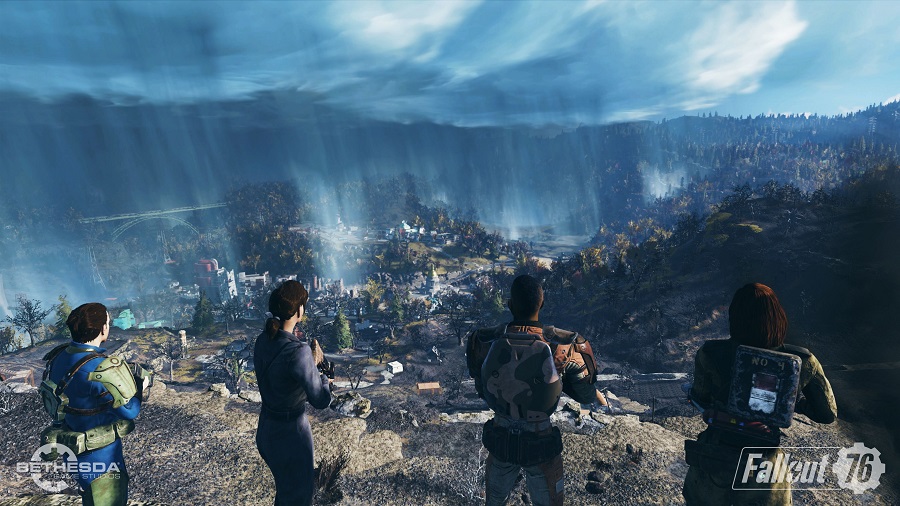
Fallout 76 (2018) — an online experiment that survived
Fallout 76 is Bethesda Game Studios’ most controversial and ambitious project, released on November 14, 2018. It is the first multiplayer online game in the series, set in 2102 — only 25 years after the Great War. Players emerge from Vault 76 on Reclamation Day to settle the post-apocalyptic West Virginia region known as Appalachia.At launch, the game faced massive criticism: no NPCs, bugs, poor optimization, an empty world, and controversial game design decisions. Fallout 76 seemed unfinished and soulless, especially compared to the series’ single-player titles. However, over time Bethesda actively developed the project: adding live characters, full storylines, factions, raids, events, seasons, and even the ability to become a ghoul with unique abilities.
- exploring an open world recreating real West Virginia locations — from bridges and resorts to ghost towns;
- building bases using the C.A.M.P. system, placing turrets, workshops, farms, and shops;
- battling mutants, raiders, robots, and creatures from local folklore including Mothman and Bigfoot;
- using nuclear weapons to clear zones and obtain rare loot;
- a perk card system allowing mixing and matching play styles;
- microtransactions via the Atomic Shop — cosmetic only, no impact on balance.
With the Wastelanders update in 2020, the game got a new lease on life, and in 2024 popularity surged thanks to the Fallout Amazon Prime series. Currently, Fallout 76 is supported by regular patches, seasonal events, and new expeditions including Atlantic City and Skyline Valley.
Although still far from cult status, it has become an example of how a failed launch can be transformed into a stable online project. Fallout 76 is an experiment that survived and continues to evolve, offering a unique perspective on the Fallout universe in an MMO format.
Fallout — TV Series (2024) by Amazon Prime
Released in 2024, it received positive reviews and attracted a new audience to the franchise. The events take place in 2296 — the latest period in the series chronology. The main heroine, Lucy McLean, leaves Vault 33 searching for her father. Her path crosses with a Brotherhood of Steel soldier and a ghoul mutant who used to be an actor.The series expands the Fallout universe, showcasing new regions, Vaults, and factions. The story does not contradict the games but complements them: viewers learn more about Vault-Tec, life in the Vaults, and the surface world. The production was led by Jonathan Nolan and Lisa Joy, with Ella Purnell, Walton Goggins, and Kyle MacLachlan starring.
The series’ success inspired new players: sales of Fallout 4 and Fallout 76 noticeably increased after the premiere. The second season is expected in 2025.
The future of the series: will there be Fallout 5?
The future of the Fallout series excites fans worldwide. Bethesda has officially confirmed that Fallout 5 is indeed planned but its release is a distant prospect. Currently, the team focuses on two large projects: Starfield, released in 2023, and The Elder Scrolls VI, still in development.According to Todd Howard, Fallout 5 will be the studio’s next major project after completing TES VI. However, considering Bethesda’s development pace, the game is expected no earlier than 2028–2030. So far, there exists only a “one-page concept” outlining key ideas and directions.
Rumors fuel interest: Obsidian Entertainment, creators of the cult Fallout: New Vegas, are reportedly interested in making a new spin-off — possibly New Vegas 2. Since Obsidian and Bethesda are now both under Microsoft’s ecosystem, such a cross-project is quite plausible, although no official confirmation exists yet.
An additional boost to the franchise came from the Fallout Amazon Prime series released in 2024. It received high praise and expanded the audience, showing that interest in the universe has not faded. According to Howard, some plot elements were deliberately left out of the series to save them for Fallout 5 — indicating the game is already shaping up in the developers’ minds.
While fans speculate about possible locations (rumors say a return to the US West Coast), Bethesda remains silent. But one thing is clear: Fallout 5 is not just a sequel but a chance to rethink the series using new technology, an updated engine, and years of experience.
Conclusion
Fallout is not just a game series but a whole universe spanning decades of history, numerous factions, moral choices, and unique characters. From isometric RPG to a large online world — the franchise has come a long way while preserving its uniqueness.And although Fallout 76 is currently the latest game, the series has a future. Fallout 5 will definitely be released, and judging by the interest in the series and updates, many more nuclear adventures await us.